👋 Introducing Amplify AI: Fast brand signals for social video
LEARN MOREInnovation Spotlight: REESE’S PIECES with Chocolate Cookie

Welcome to Innovation Spotlight! Each month we’ll spotlight a brand that’s capitalizing on a current consumer trend with a new product innovation.
This month we researched REESE’S PIECES with Chocolate Cookie, the brand’s first US innovation in a decade — and a bet that texture is what makes a decades-old candy feel new again.
Read on to get our analysis of the product's in-market potential, the audiences it appeals to, as well as what you can learn from it to innovate smarter.
The complete playbook for de-risking product launches
Download our guide for more on how to use consumer insights to take the risk out of product innovation.
REESE’S PIECE with chocolate cookie has three layers: a crispy chocolate cookie center, the peanut butter flavor the brand is known for, and the candy shell that makes REESE’S PIECES recognizable on the shelf. The flavor remains the same, just with an added crispy texture.
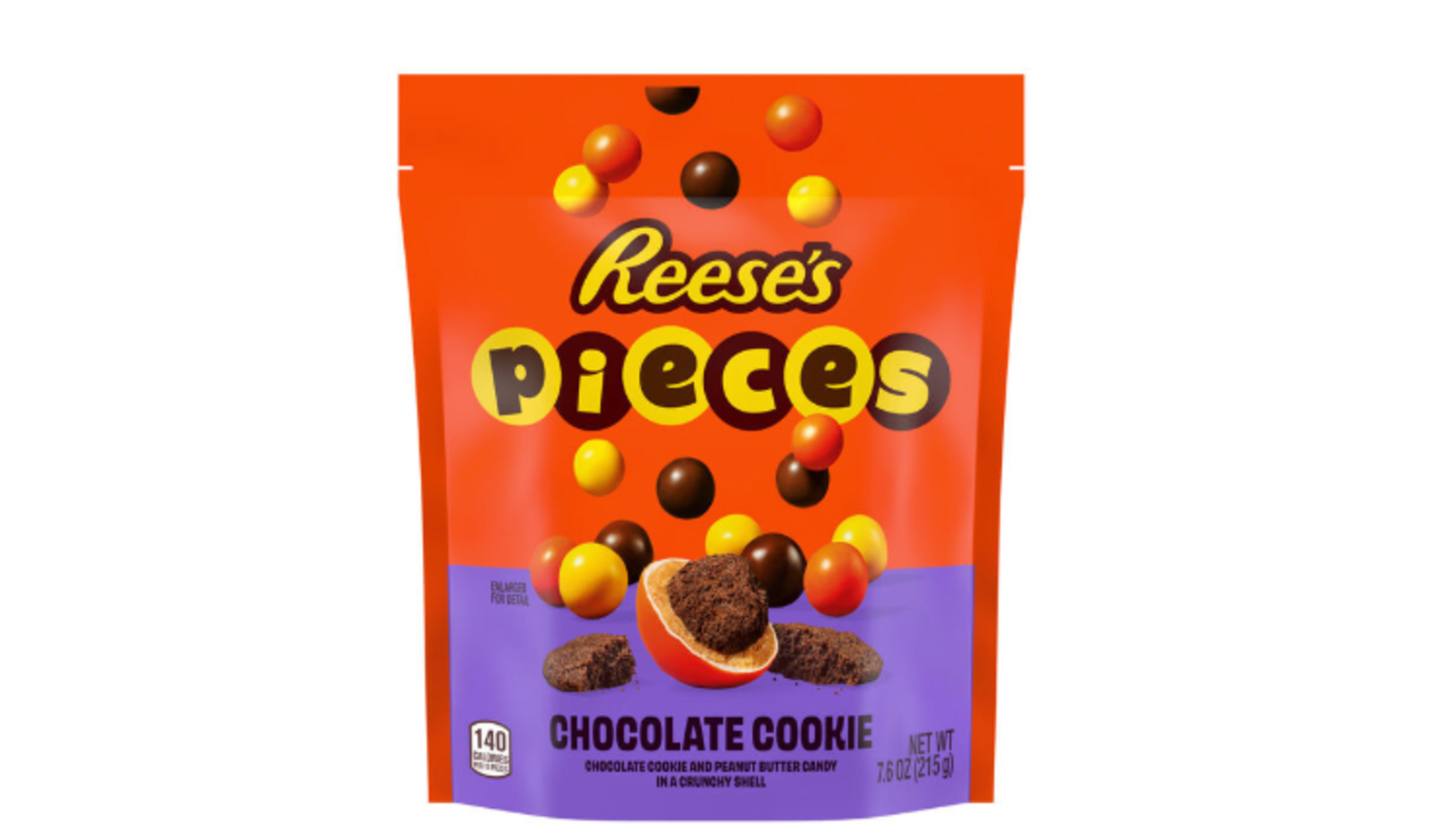
Hershey announced the product this summer with pouches, with king size following later this year. It’s priced at $5.99 for a 7.6 oz pouch.
Hershey is explicit that it’s the first US REESE’S PIECES innovation in 10 years, and that the launch is a response to consumers wanting more texture in their snacks. As Melissa Blette, senior brand manager for Reese’s, put it: “Reese’s has always been known for its signature peanut butter and chocolate combination, and with this innovative product, we're excited to give consumers a fresh way to experience it.” The product had already been running in Canada in limited quantities since 2024.
Texture was the defining theme of the 2026 Sweets & Snacks Expo — “texture is the new flavor,” as 210 Analytics put it presenting the National Confectioners Association’s State of Treating report.
Nestlé USA’s 2026 Food & Beverage Trends report quantifies how much more texture lands with younger people: 75% of Gen Z and 80% of Millennials say texture is a primary influence on what they crave in a snack.
But this is interesting for another reason as well. Last year Hershey’s launched REESE’S OREO Cup with Mondelēz. That product made over $188 million in retail sales in its first year, becoming Reese’s number one innovation of 2025 and bringing new and younger consumers to the brand.
REESE’S PIECES with Chocolate Cookie is the same idea (peanut butter plus cookie plus crunch) without the partner, the license or the co-branding.
So we know a cookie center works. The question is whether Hershey can have the same impact without Oreo’s cookie in it. Let’s find out!
1. A small change to a product people already love is one of the safest bets in innovation. We see this pattern often with seasonal innovation where new shapes and colors of familiar favorites perform very well. People don’t have to decide whether they’ll like it, only whether they want to try it. As one respondent put it: “I like the classic Reese’s Pieces format, but with the chocolate cookie in the middle.”
When you have a product people already love, one well-chosen change tied to a trend can do more than a big revamp. REESE’S PIECES with Chocolate Cookie scores well above the norm on both distinctiveness (78% vs. 73% norm) and advantage (61% vs. 53% norm), with a strong unpriced trial potential (69).
2. Tapping into a trend can keep your brand relevant with younger consumers. Crunch is a young person’s trend and we see this reflected in our data: under-45s and over-45s are close on whether the product is different ((Distinctiveness: 81% vs. 75%), but far apart on whether it’s better than what’s already available (Advantage: 71% vs. 46%) and even more split on whether they’d buy it (Priced Purchase Likelihood: 69% vs. 41%). So we can see older consumers aren’t really put off by the product — they’re simply less interested in buying a new one just for the crunch. Reese’s picked a texture trend that skews young but the flavor its existing buyers come for is exactly the same. That’s what makes trend-led innovation less risky for an established brand to stay relevant.
3. When you rarely change your product, the change itself is the novelty. REESE’S PIECES kept the peanut butter and chocolate combination it’s known for and added one thing: a crunchy cookie center. That produced a breakthrough potential of 83 and distinctiveness above the norm (78% vs. 73% norm). The ten-year gap gave people a reason to pay attention to something they already liked the sound of: “their first innovation in 10 years is genius,” “that's very exciting to me,” “It’s a milestone being the first innovation in 10 years to REESE’S PIECES in the US.”
At the same time only 23% describe the product as innovative — the lowest-scoring attribute we tested. So the excitement isn’t really about the innovation but more about the brand doing something new.
That’s an asset heritage brands often undervalue. When people know your brand well, they notice when something changes. If you’re always launching something, you risk your innovations landing as noise rather than news.
We use two key measures to determine a product’s success in-market: breakthrough potential and trial potential. Trial potential measures a product’s purchase likelihood, while breakthrough potential measures:
How different a product is (distinctiveness)
How superior a product is compared to what's already available in market (advantage)

REESE’S PIECES with Chocolate Cookie has a breakthrough potential of 83 — a strong result for what is a twist on a product people already know. It’s driven by two things working together: people see the product as both different from what’s already out there and better than it.
The distinctiveness score is the first half of that (78% vs. 73% norm) — well above the average US candy and confections innovation and impressive for a product whose flavor hasn’t changed.
Advantage clears the norm too — and that’s the biggest gap we saw anywhere in the test (61% vs. 53% norm). People appreciate what’s been added and they think it’s an improvement to what’s already available.
Unpriced trial potential is strong at 69 and it only drops to 48 once people see the $5.99 price tag. This is expected, though it suggests the price might be a little high for a product in this format.
Distinctiveness is fairly consistent across the groups we looked at — men (82%), under-45s (81%), women (75%) and over-45s (75%), with early adopters highest of all (88%). But only men, under-45s and early adopters land well above the 73% norm. For women and over-45s, the product is no more distinctive than the average candy innovation.
On the other hand, we see a sharp divide with advantage. Adults under 45 are by far the most convinced this product is better than what's already available (71% vs. 53% norm), with early adopters just behind (70%) and men also above the norm (64%). Women sit at 58%, in line with it, while over-45s drop to 46% — below the norm.

We see the same pattern when we look at priced purchase likelihood. Under-45s are the most willing to buy (69% vs. 58% norm), followed by early adopters (66%). Men (63%) are more likely to buy than women (54%), though both sit in line with the norm. And again, over-45s fall to only 41%.

It’s the same story throughout: this product lands hardest with younger, more experimental shoppers — the exact audience Hershey says REESE’S OREO brought to the brand and exactly what we would expect for a texture trend that resonates best with younger consumers.
Overall, REESE’S PIECES with Chocolate Cookie is associated first and foremost with crunch — precisely the one thing Hershey changed. That matters because the brand hasn’t touched this product in a decade and chose texture as the element to change.

When we asked what people liked about the idea, we saw a similar pattern:
The crunch
Texture was the most specific thing people were excited about, especially because REESE’S PIECES don’t normally have it. Several respondents pointed out that a crunch element is new for the brand.
People said things like:
“I like that there's a crunch element to it; there usually isn't in Reese's and that seems interesting (in a good way). I think it would taste good.”
“I like the crunchy cookie center while keeping the classic peanut butter chocolate flavor plus the resealable pouch is really convenient.”
“It combines 3 different types of textures and flavors.”
The fact that nothing was taken away
The second theme is reassurance. What people appreciated was that the peanut butter is still there so nothing is being sacrificed.
People said things like:
“I like the classic Reese’s Pieces format, but with the chocolate cookie in the middle.”
“I like that it retains some of the original chocolate and peanut butter. Also, I like the hard candy shell.”
“New twist to a familiar and favorite product.”
The news itself
The “first innovation in 10 years” line was in the concept, and people repeated it back as their reason for being interested. For a well-known brand, a decade of not changing is what makes the change feel like an exciting event.
People said things like:
“Everything! Their first innovation in 10 years is genius. Chocolate cookies and peanut butter — yummm!”
“I love that it's a new product, which Reese's has not done in 10 years! That's very exciting to me. I'm a fan of cookies and cream flavors so this is right up my alley.”
“I like the fact that you still get that great peanut butter and chocolate, while enjoying more crunch. It’s a milestone being the first innovation in 10 years to REESE’S PIECES in the US.”
Loyalty to the brand
Reese’s loyalists describe trying new launches as a habit — they buy whatever the brand puts out purely because they like everything else it makes.
People said things like:
“It is my favorite brand so I will definitely buy and try this product.”
“I love Reese’s, it's my favorite candy. I always try the new products that Reese’s comes out with.”
“Although I haven’t tried it, it seems like a good combination. Everything Reese’s puts out is great.”
Reese’s has spent decades as one of America’s best-loved candy brands, and a 10-year gap in REESE’S PIECES innovation clearly did it no harm at all. But the crunch has given people something to talk about again — and it’s landed hardest with the younger, more experimental shoppers Hershey has spent the last year working to bring in.
Looking to understand how consumers will respond to your new innovation ideas before launch? You can test and optimize your innovative new concepts with Zappi’s connected Innovation System. Get a demo to learn more.
And to make sure you never miss one of our Innovation Spotlights, subscribe to our LinkedIn newsletter.
The complete playbook for de-risking product launches
Download our guide for more on how to use consumer insights to take the risk out of product innovation.


