⚽️ What's working in FIFA World Cup marketing this year?
GET THE REPORTBeyond clicks and views: Measuring brand impact

Social media dashboards measure activity rather than brand impact. You can see the views and the likes, the video click-through rate and even the very second someone stopped watching your video.
Yet, activity doesn’t answer the question of which creative contributes to successful brand building.
In this article, we’ll explore where engagement metrics fall short and how newer approaches are making it possible to bring consumer-informed feedback into creative decisions without turning them into a full research project.
Amplify AI
Learn more about Amplify AI and how it provides fast brand signals at scale.
Because the amount of content that requires campaign asset testing has grown.
A few years ago, a social campaign might have consisted of a TV commercial, a few display ads and Facebook and Instagram posts.
Now one campaign can include dozens of TikTok videos, Instagram Reels, YouTube Shorts, creator partnerships and not to mention regional versions.
Creatopy’s CEO, Dan Oros, says an ad campaign that might have used 200 assets in the past could now use 4,000.
Producing more creative content creates more decisions. Which versions are worth running? Which messages are landing? No one wants to produce more content “just because.”
Take the 2026 FIFA World Cup. Brands publish a continuous stream of match-day highlights, creator content, regional promotions and reactive social posts throughout the tournament. A single match can trigger dozens of new assets, each generating its own set of engagement metrics.
But even though brands now publish dozens or hundreds of campaign assets, typical metrics still don’t tell the whole story.
Engagement metrics help marketers optimize campaign performance, allocate media resources and understand how content performs across platforms. However, different metrics answer different questions.
Views measure exposure, not impact
A million views tell you a million people had the chance to see your content. Completion rates tell you whether they watched it through, and reach tells you the exposure rate for unique users.
Such metrics tell you if people encountered the creative, but they don’t answer important questions like whether people remembered the brand, understood the message or changed how they think or feel.
For example, two TikTok videos may each reach a million views, but if one is built around the creator and the other is built around the product, the outcomes can be very different.
In the first case, the viewer may remember the creator, while in the second, the viewer remembers the brand — and both versions can result in very different outcomes. But traditional metrics don’t measure the cause.
Clicks and likes reflect actions, not brand perceptions
Likes, shares, comments and click-through rates say that people took action. It’s useful for telling marketers which creative attracts attention and encourages interaction.
But as every marketer knows, interaction is a useful metric, but it’s not the same as building a brand. For instance, a creator partnership might earn exceptional engagement because audiences love the influencer but loving the influencer doesn’t guarantee viewers remember the advertising brand.
As Zappi’s State of Creative Effectiveness report notes, successful advertising does more than capture attention. It influences how people think and feel about the brand in both the short and long term.
Media metrics help optimize distribution
Engagement metrics are useful and help optimize media performance by answering questions like:
Which creative earns the highest completion rate?
Which audience generates the lowest cost per click?
Which platform delivers the best return on media spend?
Which creator partnership drives the strongest engagement?
Those are important distribution decisions, but not necessarily creative decisions. They help you allocate budget and optimize for platforms, but they don’t give the complete picture of your creative’s effectiveness in terms of your brand.
To recap: Engagement metrics tell marketers what people did, but brand signals help explain their thinking and why they reacted the way they did.
Ipsos’ Creative Effect Index frames effective advertising as work that influences behavior or builds a stronger brand relationship. Brand signals also measure whether the creative helps to build memory and make the brand stand out and be recognizable over time.
In short, brand signals help marketers see whether the creative is building a brand or simply generating activity.
Some of the most important brand signals include the following:
Brand linkage
Can viewers correctly identify who the ad was for? Strong creative should be memorable for the right brand.
Think about what makes your brand distinctive. Is it your color palette? A consistent character? Or other distinctive brand assets (DBAs) that can help consumers identify and link to your brand?
Consider Progressive’s Flo. The memorable headbanded character has appeared across numerous campaigns and is now associated with the insurance company, causing everyone to know exactly who the ad is for as soon as she appears on screen.
Distinctiveness
Social media is only getting more crowded, so brands have to find new ways to stand out.
The DBAs we mentioned above is one great way to stand out. Easily cuing your brand through DBAs, demanding attention through emotions or even the use of a celebrity (if it makes sense for the band) or influencer are other ways that can help you stand out.
Message communication
Did people understand the intended message? Brands can spend months refining a campaign, but consumers experience the message in seconds. For example, a snack brand may intend to highlight that its product is high in protein. If viewers come away remembering only the humor or celebrity appearance, the creative will have entertained them but failed to communicate its most important message.
Emotional response
Did your ad make people feel something? Enough to pause and watch the full ad? Getting people to pay attention is another hurdle to standing out from the noise.
In Zappi’s analysis of more than 100 high-performing ads, ads in the top 25% of overall emotion were twice as likely to drive sales. Emotions give viewers a reason to care.
Brand fit
Duolingo’s TikTok strategy is one example where the creative feels like a natural extension of the brand.
The mischievous owl appears in trend-driven and playful TikTok videos while remaining unmistakably Duolingo. It’s content that feels part of the brand, while reinforcing the brand’s values and tone.
The gap between content production and consumer validation is driving a new generation of measurement approaches.
These approaches extend traditional research and help marketers make advertising asset testing practical across more creative variations.
Advances in machine learning, predictive modeling and synthetic respondents are making it possible to generate directional brand insights in a fraction of the time required for conventional studies. Instead of waiting days or weeks for consumer feedback, marketers can evaluate larger volumes of creative while campaigns are still being developed and refined.
New technology helps bring consumer insights into part of the creative workflow without creating a bottleneck. Consider a product launch with one hero video, six influencer edits, eight TikTok videos and multiple six-second cutdowns for paid social. Teams can use fast, directional signals to identify which versions are most likely to strengthen brand perceptions before allocating media spend.
Before, you looked at the data and chose the assets with good engagement; now you can use consumer-informed brand asset testing to optimize the best creative for your brand.
Engagement metrics will always play an important role in measuring campaign performance because it’s useful to see how audiences interact with distributed content.
Yet, brand signals answer a different set of questions.
So when it comes to engagement metrics vs. brand metrics, both matter because they answer different questions.

Taken together, these measures provide a more complete picture of a social campaign’s creative effectiveness.
As marketers continue to scale content production, they need ways to extend consumer validation beyond a handful of hero campaigns.
That’s the challenge Amplify AI was built to address. Amplify AI helps teams evaluate high volumes of social video and YouTube assets trained on Zappi’s proprietary consumer research and AI-simulated audience responses to give teams a fast read on which social videos are most likely to build the brand.
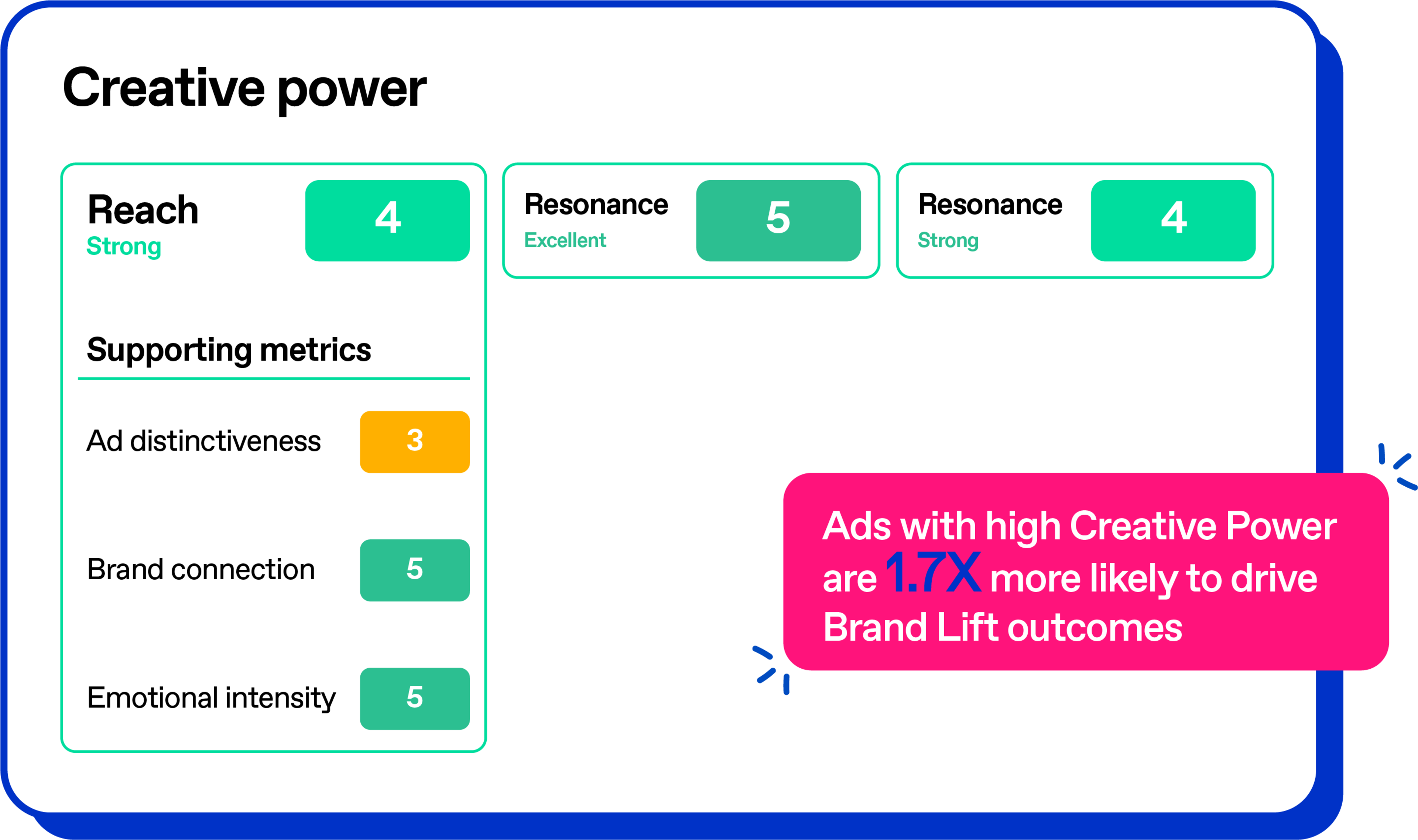
The platform delivers directional brand-signal insights in as little as 30 to 60 minutes, making it practical to assess larger volumes of creative without slowing down production. Brands can continue using in-depth human-led testing for flagship campaigns while applying faster, scalable evaluation across the broader stream of social assets, creator content and campaign variations that often go untested because there’s no time to test everything.
Until now.
Imagine a snack brand has one hero video with 14 shorter creator edits and paid social cutdowns. The hero video receives deeper testing with real consumers. The team then uploads the shorter videos to Amplify AI for fast, directional social video testing.
The results show that one creator video is likely to generate engagement, but has weak brand linkage because viewers remember the creator’s joke, but not the snack brand.
A different edit has a stronger brand impact because the product appears earlier and the packaging is more visible.
Having such results early on gives the team a better basis for deciding which assets to revise, prioritize and support with media spend.
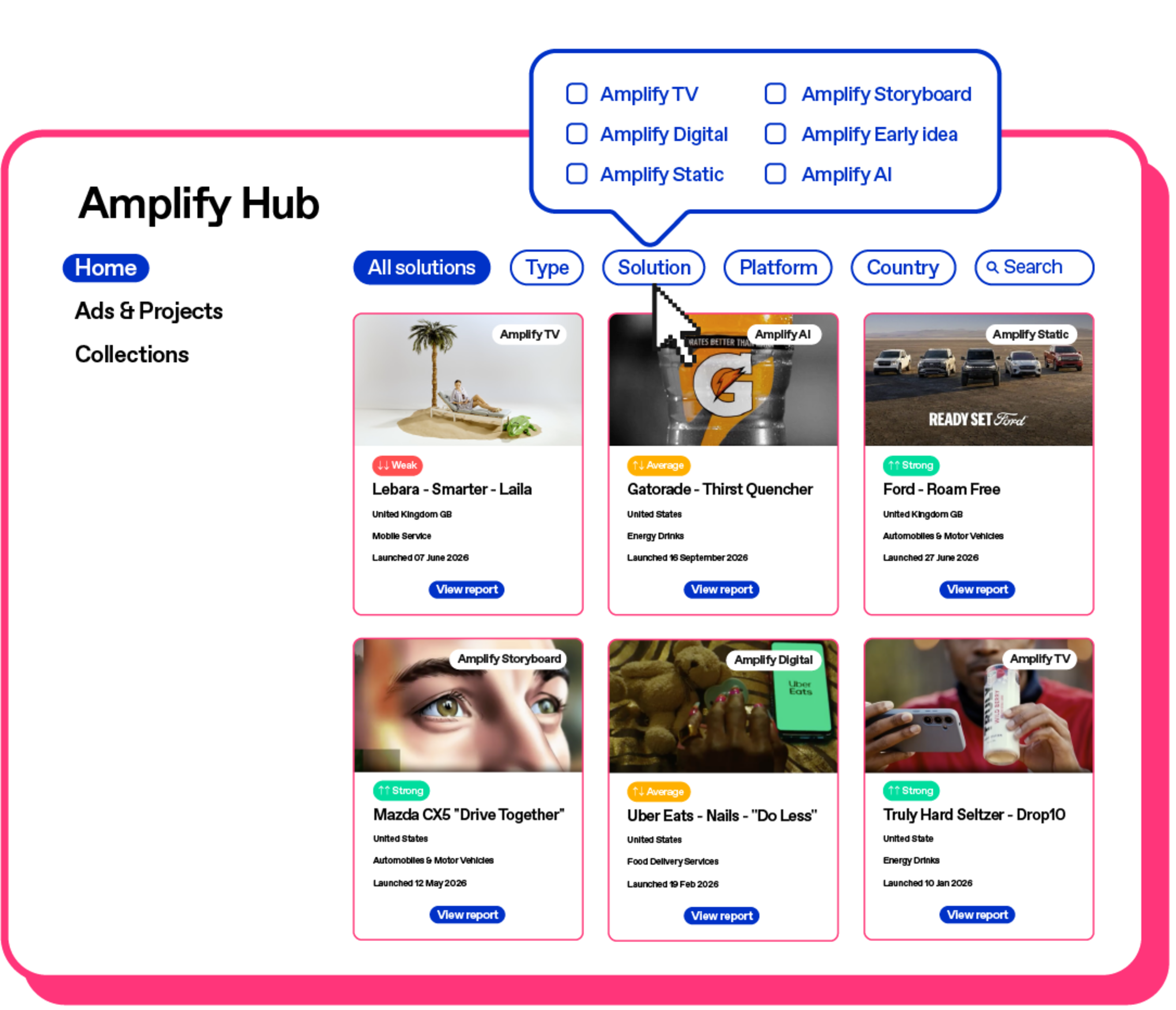
And Zappi’s new Amplify Hub brings all the tested creative together in one place. Teams can organize assets, compare performance and spot patterns across campaigns, channels and markets, complete with an Ad Library that gives teams a single view of tested ads and Collections to let users group related assets.
Creative testing compounds. When teams can compare assets across campaigns, they can build on what works into the next round.
Views, clicks and engagement rates will always matter. They help marketers understand whether content is reaching people and performing efficiently on a platform.
But attention is only part of the story.
Creative effectiveness and brand impact depend on what happens after someone watches. Did they recognize the brand? Understand the message? Feel something worth remembering? Give the brand a stronger chance of being chosen later?
As content teams produce more social video, creator content and campaign variations, those questions cannot be reserved for a handful of hero ads.
The brands that learn and move faster will have the advantage. They will not just know which assets generated activity. They will know which ones are worth refining, investing in and building on.
That is the opportunity: bringing consumer-informed brand signals into more creative decisions, so teams can create more content without losing sight of what the content is meant to do.
Amplify AI
Learn more about Amplify AI and how it provides fast brand signals at scale.


